A modern sanitary landfill — accepting no hazardous waste of any kind — has been proposed on a 735-acre site located outside the Town of Navassa. With the existing Brunswick County landfill reaching full capacity, this proposed facility will serve a critical need in Brunswick County while also serving other parts of eastern North Carolina and coastal South Carolina.

The project will generate more than $1 million a year in income for the Town of Navassa, nearly doubling the town’s general fund revenue. These funds can be used to provide more services for residents and add additional staff.

Modern landfills are strictly regulated by the state and federal governments to protect community health and the environment. They provide a safe and economic way to dispose of waste in an environmentally protective manner.

Meetings are planned to discuss the project with the local community, and there will also be opportunities for interested parties to participate in public hearings before the Navassa Town Board.
Community Benefits

The landfill will generate substantial economic benefits that will remain in the Navassa community. A few examples:

  • A “host fee” will be paid to the Town of Navassa each month. These fees are expected to total more than $1 million each year — essentially doubling the town’s annual general fund revenue.
  • An initial payment will be paid to the Town upfront and within six months of approval of the landfill. This amount will be deducted from the host fees for the first year.
  • The landfill will generate significant additional property tax revenues.
  • The landfill owner will be an active member of the Navassa community and will provide support for important local projects, events and non-profits.

Community Issues

North Carolina is one of the nation’s fastest-growing states, and existing landfills in Brunswick County are close to reaching their capacity. A landfill survey in July 2024 found that the Brunswick County Landfill in Bolivia had only 0.23 million cubic yards of available capacity left.

This 735-acre site is ideal because:

  1. it is easily accessible by I-140, US Hwy 74 and US Hwy 421;
  2. it is large enough to establish two disposal units; and
  3. it has large, expansive buffers that will shield the project from view and diminish or eliminate noise and odors.

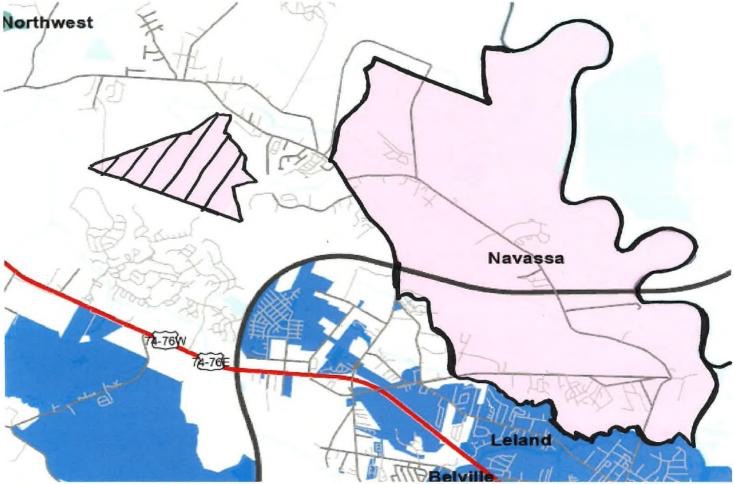
The site is located on approximately 735 acres south of Mt. Misery Road. It is located outside the Town of Navassa (due to a satellite annexation) and is not located near residents of the town and their homes and businesses.

The site is marked on the map below:

The facility will be a modern sanitary landfill that accepts only municipal solid waste (or “MSW”) and construction and demolition debris (or “C&D”). These terms are defined by state law. No hazardous materials of any kind would be accepted.

MSW generally consists of everyday household trash — things you buy at the store and throw away. Construction debris is the leftover material when you build or demolish a house.

  • Truck Traffic: Truck traffic is a fact of modern life, especially in a growing community. Trucks supply food to schools and restaurants, deliver heavy equipment to job sites, carry new cars to dealerships, and supply raw materials to manufacturing centers. This site is already zoned for heavy industrial uses that would result in the same amount of truck traffic (or more) at all hours of the day.The owner has engaged a traffic engineering firm to study the project and recommend necessary steps to maintain traffic safety and the current level of service on nearby roads. The landfill will be required to perform road improvements and upgrades that are recommended by the engineer and the NC Department of Transportation. The landfill operator will also collect litter — regardless of whether it is generated by trucks delivering material to the facility — for 1/4 mile on both sides of the entrance on Mt. Misery Road. Unlike truck traffic that could be generated by other types of industrial users, traffic from the landfill will be limited to specific hours (7:00am to 5:00pm on weekdays, 7:00am to noon on Saturdays).
  • Noise: Because the site is already zoned for heavy industrial users, any development for heavy industry potentially generates some form of noise. The noise generated by this project would primarily come from earth moving equipment and compactors (heavy vehicles that drive across trash after it is deposited). This facility will not generate noise after it closes each day, and it will be closed on Sunday. Noise will be mitigated by distance from neighbors, heavy vegetation that will be planted around the site, and the construction of large berms. Brunswick County and the Town have existing noise ordinances that will be followed.
  • Odor: Odor will be controlled through a combination of waste management practices and modern technology. These include daily waste compaction, covering the waste with at least six inches of dirt at the end of each day, and using gas collection systems. Berms and buffers will also minimize odors, and the State permit will require odor to remain within the facility boundary.

While it may seem counterintuitive, studies from across the United States have consistently shown that homes near landfills generally sell for the same amount and remain on the market for the same time as homes farther away. This is especially true when there are large buffers and substantial setbacks like this facility will have.

Housing subdivisions are in fact commonly built adjacent to landfills. For example, the Charlotte Motor Speedway is partially built on a closed landfill, and three subdivisions were built next to the speedway when the landfill was still operating.

We started this website to keep the community informed, and it will be updated regularly. There will also be a series of public meetings held in the Navassa community.

Community meetings will keep neighbors informed about the landfill and are a chance to have your questions answered. There will also be a public hearing by the Town Council on whether to grant a franchise for the landfill.

If the Town grants a franchise, the property owner must then apply for and receive a special use permit, which is a type of zoning approval issued by the Town Council. The special use permit application is considered at an evidentiary hearing where anyone with “standing” may participate.

Environmental Issues

The facility will only accept municipal solid waste and construction and demolition materials. Again, these terms are specifically defined by state law. No hazardous materials of any kind will be accepted. This is strictly regulated by the NC Department of Environmental Quality (DEQ).

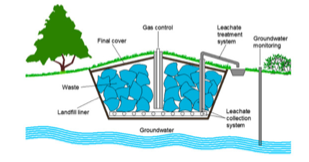
Modern landfills are designed with strict environmental protections, and they have successfully and efficiently operated in communities all over North Carolina and the United States. These protections include multiple layers of liners, leachate collection systems, and advanced monitoring of groundwater and air quality. The facility must meet or exceed all state and federal environmental safety requirements. DEQ monitors and enforces these rules.

NC regulations require that landfills include impermeable liners that prevent leachate (liquids that accumulate from rain and the waste itself) from leaving the site and reaching surrounding soils and groundwater. The landfill will have a 24-inch impermeable clay liner — topped by a hard plastic membrane that is 60 milliliters thick. A leachate collection system will be installed above the membrane to carry the leachate to storage tanks for disposal in a wastewater treatment plant.

The diagram below illustrates how modern landfills are constructed:

No one is allowed to impact regulated wetlands, and they are strictly regulated in North Carolina by the U.S. Army Corp of Engineers and DEQ. Extensive wetland delineations (wetland boundary determinations) have already been performed on this site that will be reviewed and permitted by DEQ.

Landfills generate methane gas as the waste decomposes. Methane gases will be captured onsite and converted into renewable energy. The landfill will be required to obtain an Air Quality Permit from DEQ which assures there is no risk to the public from gas emissions. This requires routine sampling of air emissions and dictates the method of disposal for gases generated by the landfill.

This will be regulated by DEQ and the landfill’s Air Quality Permit, as explained above. Other industrial employers in Navassa also have air quality permits.

The project will not have adverse impacts on local plant or animal life.

Health Issues

No. Modern landfills use advanced technologies that minimize environmental impacts, enhance efficiency and protect public health.

There are several examples of businesses, schools and homes being located near landfills once the facility is a known quantity. The East Carolina School of Dental Medicine consciously selected a site less than a half mile from the current Brunswick County landfill. Cabarrus County selected a site in 2001 immediately adjacent to a regional MSW landfill and did the same for an elementary school four years later.

There are different types of landfills, and each has its own rules for construction and operation. These rules are based on scientific and engineering studies that have been conducted worldwide over the course of many decades. In the United States, these scientific and engineering principles were codified in 1974 in the Resource Conservation and Recovery Act, Subtitle D. If you search the Internet for dangers caused by landfills, most of the articles do not distinguish between modern landfills and those that operated before 1974, which was before state-of-the-art processes and extensive government regulations were in place.

Landfills generate methane gas as the waste decomposes. This is closely monitored and regulated by DEQ and federal law to protect the public health, which includes regular testing. The same is true for dust generated by the facility.

The men and women who work daily at the disposal areas are not considered by State or federal agencies to be at risk — and the same would apply to residents in the surrounding area.

Mosquitos are already present in the area, and the landfill will do nothing to increase their presence. The landfill will contain pest control measures to prevent nuisance animals and birds. This includes placing at least six inches of dirt or “cover” on top of the waste at the end of each day so that rodents cannot access the waste.

The property owner is committed to keeping the site clean and minimizing any off-site impacts from these potential impacts from insects and rodents.

Operational Details

The facility will operate from 7:00am to 5:00pm on weekdays, and from 7:00am to noon on Saturdays.

Modern landfills are designed with multiple liner systems, leachate collection systems, and groundwater monitoring wells. State regulations require landfill operators to develop comprehensive contingency plans to identify, address, and remediate any issues that arise. This includes financial guarantees (such as bonds) to ensure that the Town and its taxpayers are not responsible for any remediation.

The useful life of this facility is estimated to be 35 years based on anticipated volume. After the landfill closes, it will be monitored and maintained for decades to ensure long-term compliance with all environmental laws.

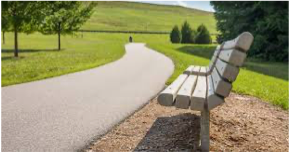
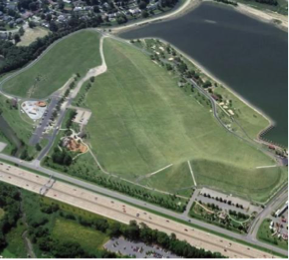
At the end of the project, the landfill will be capped with an impermeable liner that resembles the liner at the bottom of the landfill. All you will see is grass. At that point, the site can be utilized for other useful public purposes, such as parks.

Examples include:

Green Hills Park (Wake County, NC): The park is built on a former landfill site and provides a variety of recreational activities.

Mount Trashmore (Virginia Beach, VA): The nation’s first landfill park, Mount Trashmore encompasses 165 acres and includes two man-made mountains, two lakes, two playgrounds, and places for passive and active recreation and picnics.

Approval and Permits

A Landfill Franchise: The landfill operator must first obtain a franchise from the Town of Navassa. This is a form of governmental approval for certain activities, such as operating a taxi service or a cable company. In North Carolina, solid waste facilities are among those uses requiring a franchise. The requirements outlined in N.C. Gen. Stat. §130A-294 govern landfill

The granting of a franchise in Navassa does not provide approval for the landfill to operate. It instead governs, among other things, the area from which waste can be received, the types of waste permitted, and the fee that the operator must pay the Town for each ton of waste deposited. In this case, the landfill:

(a) proposes to receive waste from multiple North Carolina counties, primarily Wake County and eastward, as well as parts of coastal South Carolina;

(b) strictly prohibits hazardous, industrial, and medical wastes; and

(c) offers the town a “host fee” of $2.25 per ton. This is 25 cents above the industry standard and will provide the Town with more than $1 million in additional revenue each year.

A Special Use Permit: If the Town grants a franchise, then the owner must apply for and receive a special use permit from the town. A special use permit is a type of zoning approval. The Town’s ordinance establishes standards that an applicant must meet to obtain a special use permit. This requires an evidentiary hearing before the Town to establish the standards which includes expert testimony. Any person with “standing” may participate in the hearing.

If the property owner receives a special use permit from the Town, it then it next must obtain permits from DEQ. These include an air quality permit and a permit to construct and a permit to operate. These permits are reviewed by environmental engineers and other professionals who know the regulations governing the disposal of solid waste.

No. This property has already been zoned “heavy industrial” by the Town of Navassa. This allows intense industrial uses, including heavy manufacturing, warehousing, freight terminals, and bulk mail facilities. Each of these uses would generate truck traffic comparable to, or in some cases, much greater than a landfill.

Ownership and Responsibility

The property is owned by Elite Newco I, LLC, which is owned and managed by Dan Wall, a North Carolina entrepreneur who has been in the landfill and recycling business for many years. The landfill would be operated by a professional team of certified and licensed specialists who have received training from the Solid Waste Association of North America and other professional organizations.

The franchise will outline specific obligations and requirements for operating the landfill. If those obligations are not met, the franchise can be voided. The special use permit will contain additional obligations and requirements. Failing to meet those standards can result in fines and ultimately the revocation of the permit.

The owners of the property are legally responsible. DEQ requires the owner to post a bond (based on a proven formula) to cover expenses resulting from noncompliance.